> For the complete documentation index, see [llms.txt](https://docs.energyweb.org/llms.txt). Markdown versions of documentation pages are available by appending `.md` to page URLs; this page is available as [Markdown](https://docs.energyweb.org/launchpad/blockchain-infrastructure/rpc-node/rpc-node-quick-start-guide.md).
# RPC Node Quick Start Guide
Once you are logged in to [Launchpad](https://launchpad.energyweb.org/login), Energy Web's SaaS platform, you will be able to set up your RPC Node. To do so, follow the steps below.
## Subscription
Before you can create a new Full Node, you will need a subscription.
To subscribe:
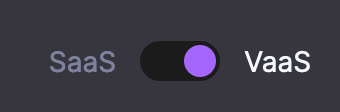
1. Verify that you are in the VaaS environment of Launchpad by checking the toggle button on the top right. You will easily recognize the VaaS environment by its dark theme
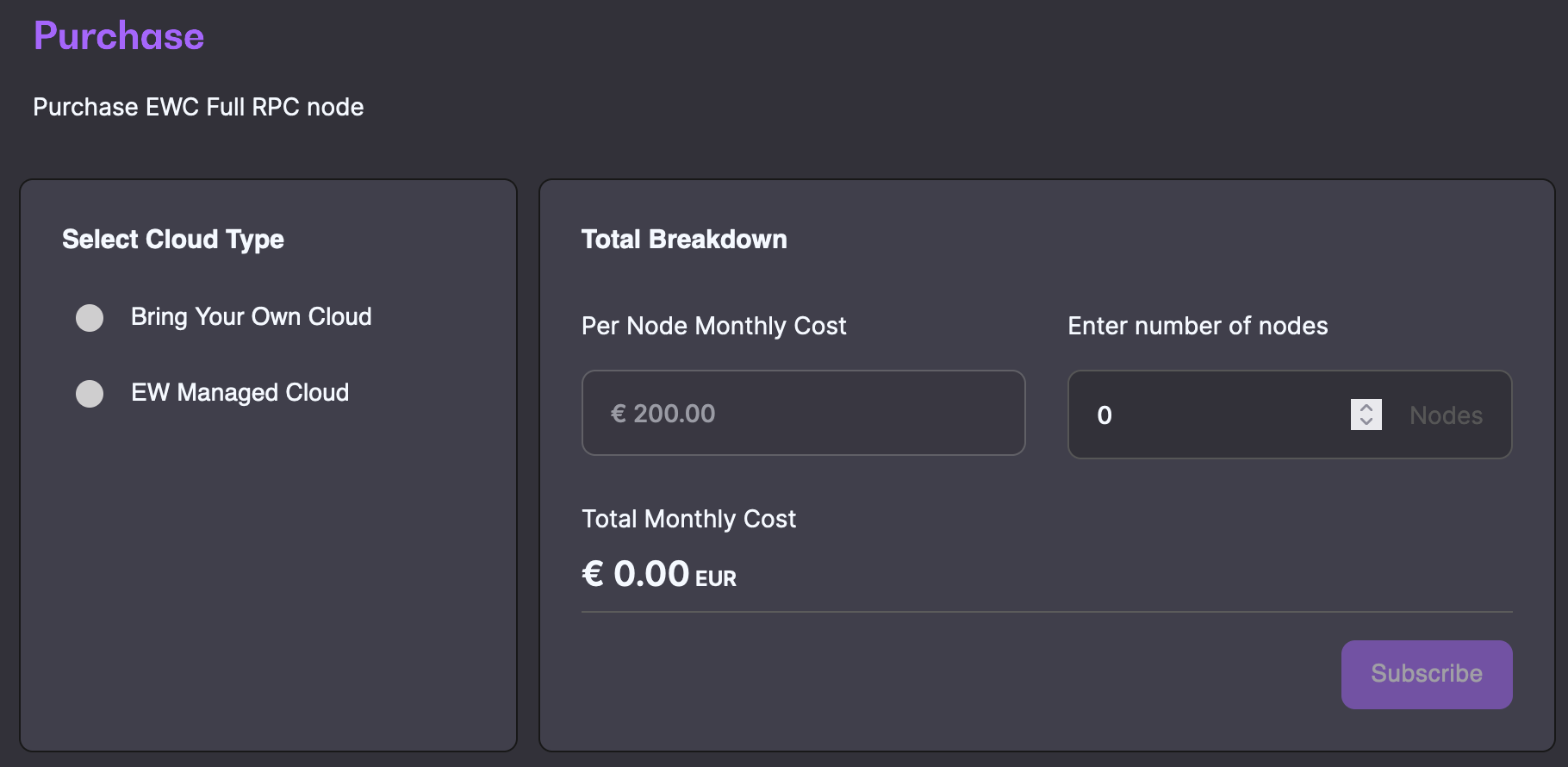
2. Under **EWC Full Node** in the left hand bar, go to "**Purchase**" and fill in the purchase form
3. You can chose between the Bring Your Own Cloud option or chose for a managed cloud
4. Click on the "**Subscribe**" button. You will be redirected to the payment page.
5. Once the payment is completed, you are ready to set-up your Full Node.
## Full Node Deployment and Management
Once you have purchase one or mode Full Nodes, you are ready to deploy them.
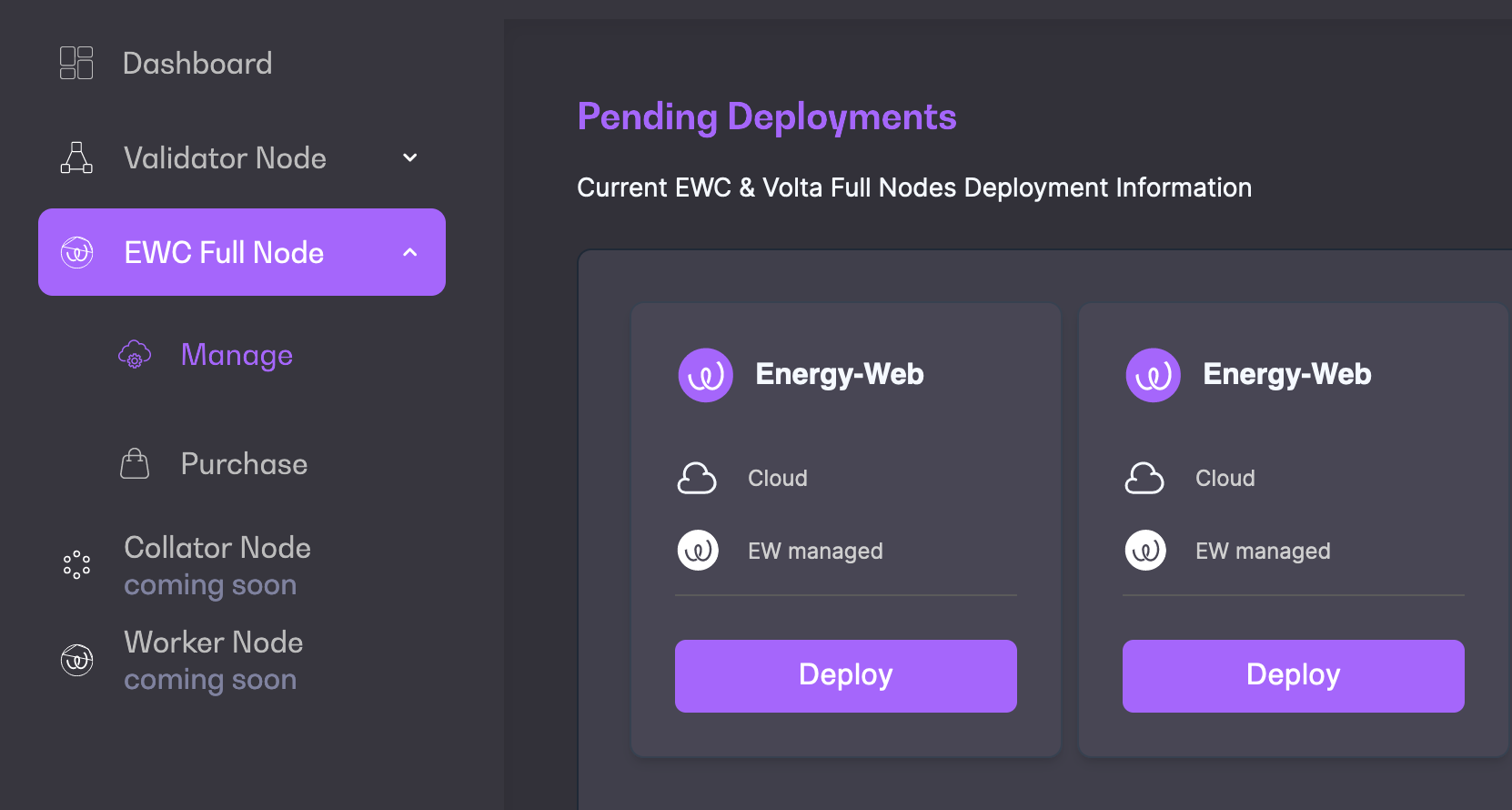
1. Under **EWC Full Node** > "**Manage**", look for "**Pending deployments**" at the top of the page. You will find all newly purchased Full Nodes that have not yet been deployed.
2. Click the "**Deploy**" button for the Full Node you want to start deploying
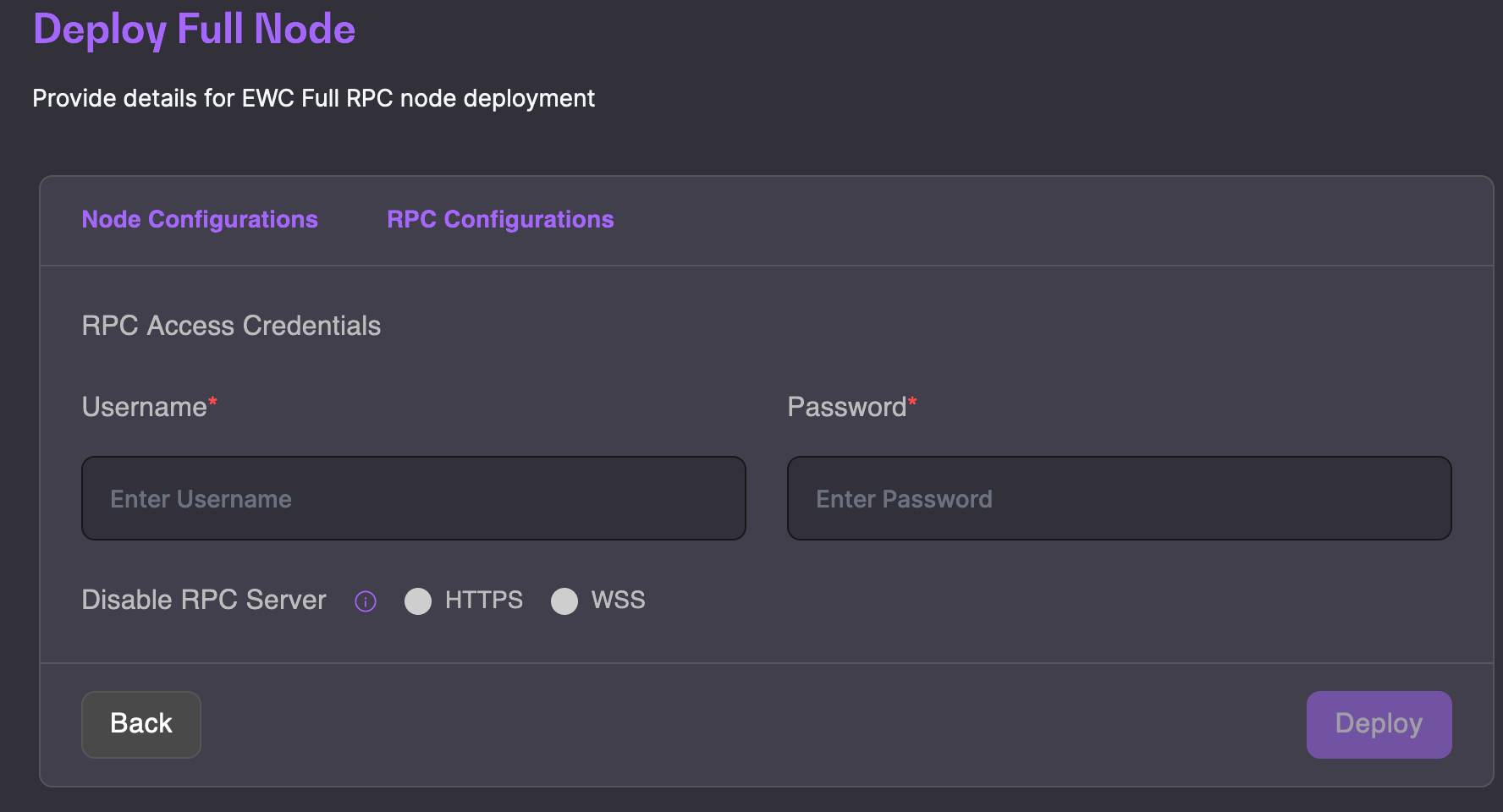
3. Enter all the Node and RPC configuration information required. On the RPC configuration page, select HTTPS or WSS **only if you wish to disable one of these RPC servers**. By default, they are both enabled.
4. Once you have pushed the "Deploy" button, your Full Node will appear under **EWC Full Node** > "**Manage**" in the "**Full Nodes**" list. It will first show with "**Requested**" as Node Status and "**Syncing**" as Sync Status. \
Several minutes later, the Node status will move to "Provisioning".
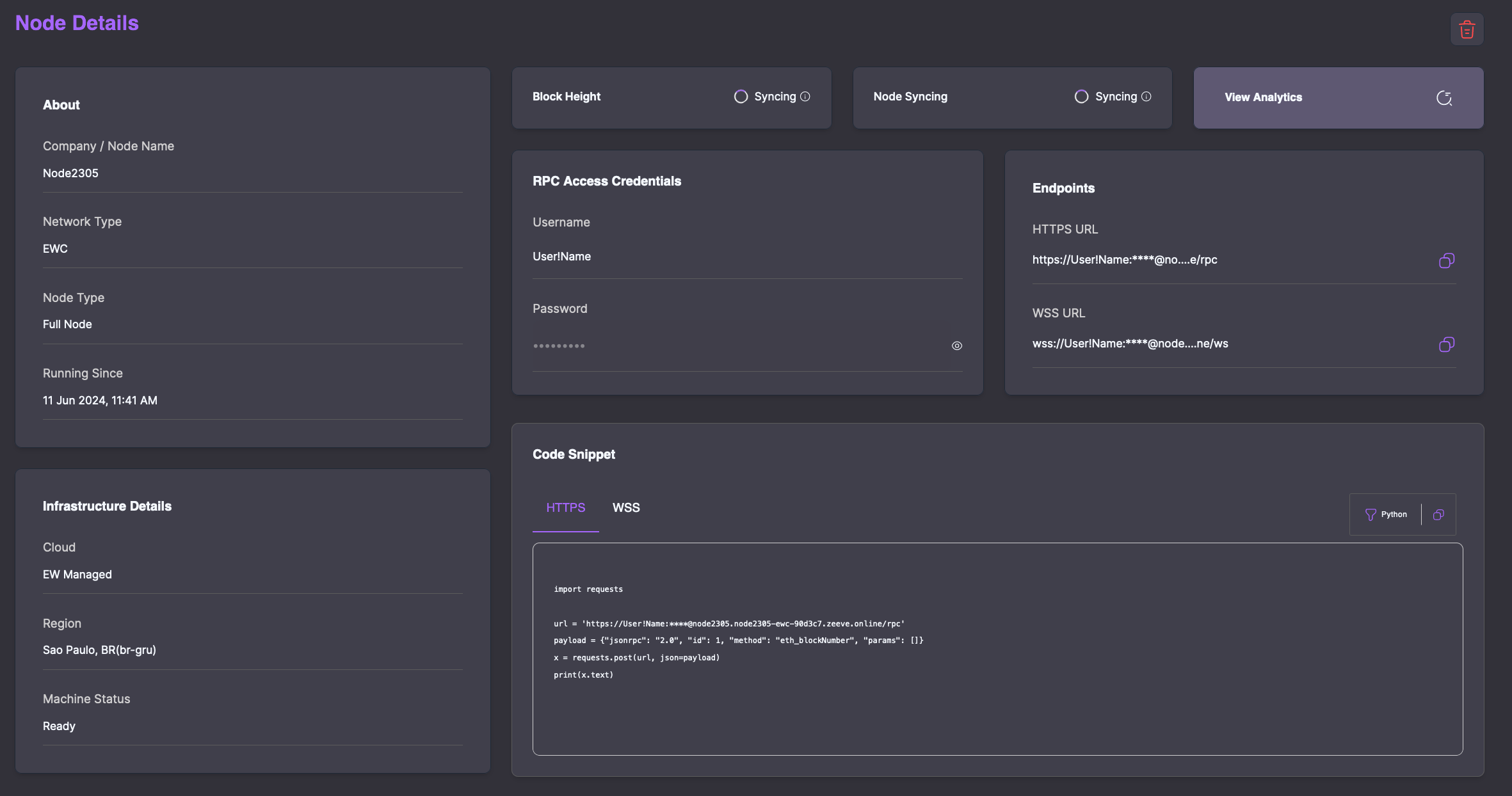
5. Within a few minutes to a couple of hours, the Node Status will switch to Ready, which means that the blockchain provisioning for the Full Node was completed. Once the Full Node is ready, you can access the Full Node details by clicking on the ℹ️ button.\
In the **Node Details**, you can see the Access credentials, copy the Endpoints URLs, copy the code snippets and review all your Node data. Note that all Endpoints data will depend on what you selected during deployment.
6. It will take around 24 Hours for the Node to be synced. You can track that change under the "**Syncing status**" of your Node. \
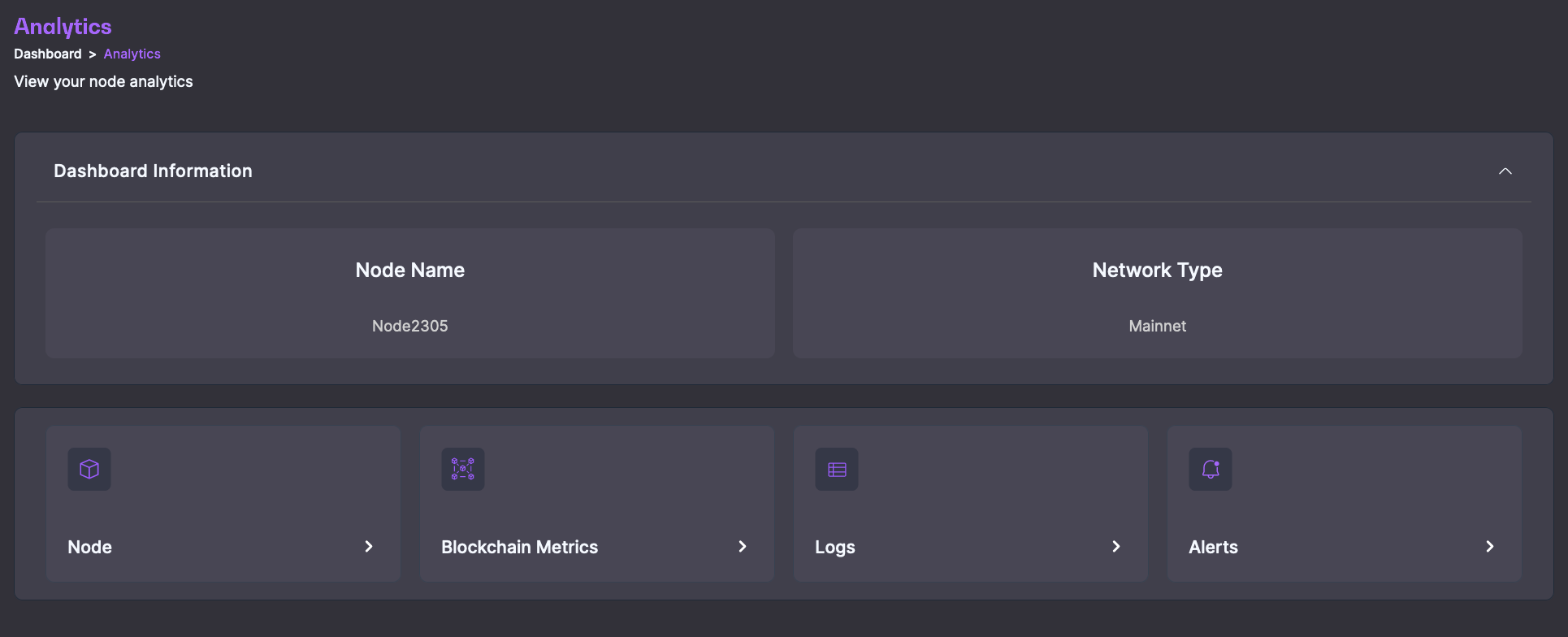
Upon Syncing, the **Analytics** become available. The analytics of your Node can be access under **EWC Full Node** > "**Manage**" by clicking the screen icon for your Node in the Full Nodes list or by clicking "**View Analytics**" in the Node Details.
7. You can navigate between 4 different kinds of analytics: **Node analytics, Blockchain Metrics, Logs and Alerts**. Navigate through the different analytics tabs to review all of it.
---
# Agent Instructions
This documentation is published with GitBook. GitBook is the documentation platform designed so that both humans and AI agents can read, navigate, and reason over technical content effectively. Learn more at gitbook.com.
## Querying This Documentation
If you need additional information that is not directly available in this page, you can query the documentation dynamically by asking a question.
Perform an HTTP GET request on the current page URL with the `ask` query parameter, and the optional `goal` query parameter:
```
GET https://docs.energyweb.org/launchpad/blockchain-infrastructure/rpc-node/rpc-node-quick-start-guide.md?ask=&goal=
```
`ask` is the immediate question: it should be specific, self-contained, and written in natural language.
`goal` is optional and describes the broader end goal you are ultimately trying to accomplish on behalf of the user. GitBook uses it to tailor the answer towards what is most useful for that goal.
The response will contain a direct answer to the question and relevant excerpts and sources from the documentation.
Use this mechanism when the answer is not explicitly present in the current page, you need clarification or additional context, or you want to retrieve related documentation sections.